Process Engineering · Advanced Fibers · Applied R&Dinfo@epcotec.de
EPCOTEC
EN/DE

INDUSTRIAL PROJECT CONCEPTS

From a promising material to equipment, process and marketable product.

This portfolio presents selected production and technology concepts across fibers, textiles, advanced materials and biotechnology. Each concept is structured around the commercial questions a project owner must answer: What enters the process? Which operations and machines create the required transformation? What product leaves the line - and which market can it serve?

The concepts are intentionally presented without customer names, confidential dimensions or project-status labels. EPCOTEC can support a complete production project, a defined machine package, individual process equipment, pilot validation or the development of a comparable application.

Boron-Free E-Glass Fiber Production
01

MINERAL FIBERS · PILOT-TO-PLANT

Boron-Free E-Glass Fiber Production

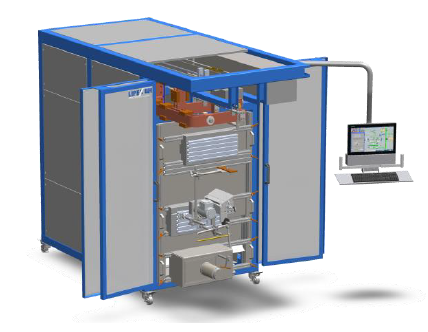
A pilot-to-industrial production concept for converting controlled mineral formulations into continuous E-glass fibers for reinforcement, textile and composite applications. The enclosed melting and fiber-forming platform provides a practical development environment for batch chemistry, temperature profile, melt conditioning, bushing operation and fiber-diameter stability. Results from this controlled system create the engineering basis for scaling the route to an integrated production plant.

Material / feedstock
Mineral batch · recycled glass · sizing chemistry
Core equipment
Enclosed pilot melter, melt conditioning, fiber-forming zone, process control and analytical interfaces
Product / opportunity
Validated glass formulations, process windows and scale-up data for industrial E-glass products
Complete project solutionMachines & process equipmentProduct & technology development
Discuss this project with EPCOTEC →
Acrylic Fiber & PAN Precursor Plant
02

POLYMERISATION · WET SPINNING

Acrylic Fiber & PAN Precursor Plant

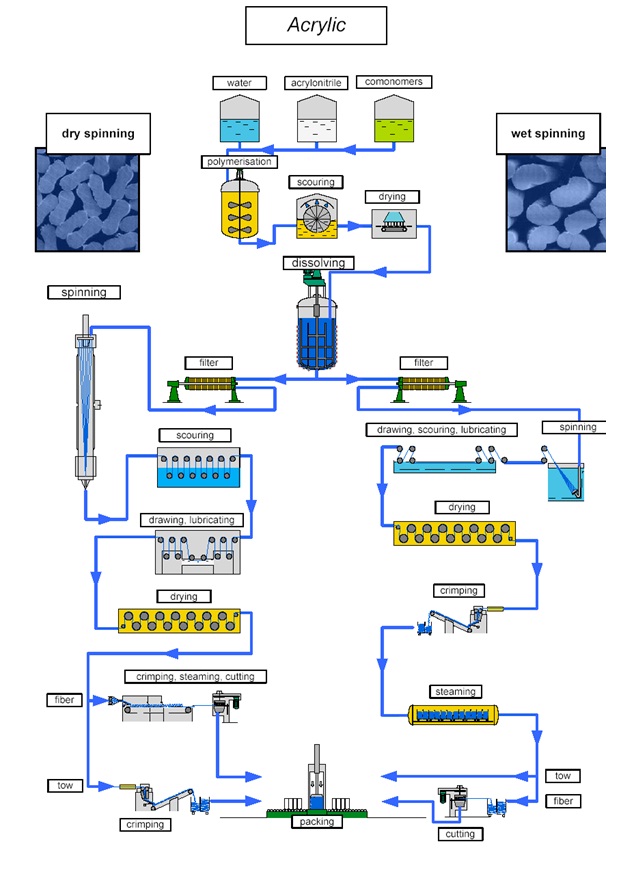
A flexible production route from acrylonitrile and comonomers to acrylic staple fiber, tow or PAN precursor. Polymerisation, dope preparation, filtration and solvent management are coordinated with wet spinning, washing, drawing, finish application, drying, crimping and cutting. Product fineness, tow size, dyeability and downstream conversion define the operating window and equipment configuration.

Material / feedstock
Acrylonitrile · comonomers · solvent · additives
Core equipment
Reactors, dope systems, filters, spinnerets, coagulation baths, draw lines, dryers and balers
Product / opportunity
Acrylic staple, tow, gel-dyed fiber and PAN precursor for advanced conversion
Complete project solutionMachines & process equipmentProduct & technology development
Discuss this project with EPCOTEC →
Bio-Plasma Textile Finishing
03

PLASMA · PILOT-TO-PRODUCTION LINE

Bio-Plasma Textile Finishing

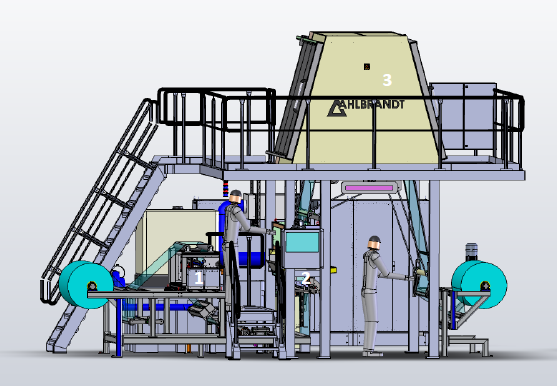
A modular plasma-assisted finishing route designed to lower fresh-water demand, wastewater load and chemical consumption in textile preparation and functional coating. The illustrated pilot-to-production architecture combines atmospheric plasma, controlled web transport, coating or spray application and downstream thermal treatment. Trials establish treatment intensity, line speed, gas conditions and chemistry compatibility before the validated module is integrated into an industrial line.

Material / feedstock
Woven or nonwoven textiles · process gas · finishing formulations
Core equipment
Atmospheric plasma module, web handling, spray or coating unit, washing and controlled drying
Product / opportunity
Activated textiles with lower-resource preparation and improved finishing response
Complete project solutionMachines & process equipmentProduct & technology development
Discuss this project with EPCOTEC →
SmartCoDress Multifunctional Wound Dressing
04

MEDICAL TEXTILES · SCALABLE FUNCTIONAL COATING

SmartCoDress Multifunctional Wound Dressing

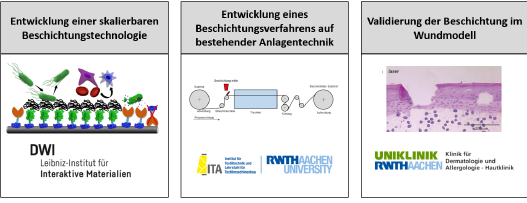
A wound-care development platform linking surface-functionalisation science with a scalable continuous coating route and validation in a representative wound model. The concept combines anti-adhesive behaviour, antimicrobial protection and healing-supportive functionality on a medical textile carrier. Formulation, coating uniformity, machine integration and biological performance are developed as one pathway so laboratory findings can progress toward reproducible manufacturing.

Material / feedstock
Medical textile substrates · functional polymers · active biomaterials
Core equipment
Formulation unit, precision coating, electrospinning, climate control, drying and sterile handling
Product / opportunity
Advanced wound dressings engineered for chronic-wound management and controlled healing environments
Complete project solutionMachines & process equipmentProduct & technology development
Discuss this project with EPCOTEC →
Controlled Lint & Microfiber Generation Testing
05

TEXTILE ANALYTICS · REPEATABLE EMISSION TESTING

Controlled Lint & Microfiber Generation Testing

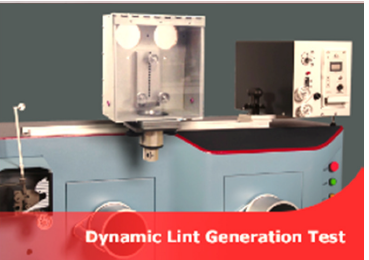
A controlled test platform for measuring lint, fiber fragments and microfibers released from yarns or textile structures under defined mechanical conditions. The dynamic test principle reproduces loading while maintaining controlled tension, speed and duration. Collected material can be weighed, classified or forwarded to microscopic and chemical analysis, creating comparable data for material selection, process optimisation and lower-shedding product development.

Material / feedstock
Yarns · staple-fiber structures · fabrics and technical textiles
Core equipment
Dynamic lint-generation tester, controlled yarn path, collection interface and analytical workflow
Product / opportunity
Comparable shedding data for product qualification, process development and environmental improvement
Complete project solutionMachines & process equipmentProduct & technology development
Discuss this project with EPCOTEC →
PlantFibre - Fibrous Structures for Alternative Foods
06

BIO-BASED FIBERS · FOOD TECHNOLOGY

PlantFibre - Fibrous Structures for Alternative Foods

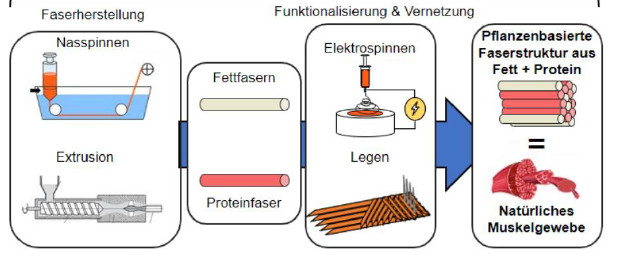
A fiber-engineering route for converting food-approved plant proteins and fats into structured components that reproduce the aligned texture of natural muscle tissue. Wet spinning or extrusion forms protein and fat fibers; controlled laying, electrospinning, crosslinking and bundling then create three-dimensional mixed structures. The process is developed around food safety, texture, tensile behaviour, sensory response and a credible path from individual fibers to industrial throughput.

Material / feedstock
Plant proteins · plant fats · food-grade binders and solvents
Core equipment
Mixing and dosing, wet-spinning or extrusion modules, electrospinning, laying, crosslinking and structuring
Product / opportunity
Edible protein-fat fiber assemblies for realistic plant-based meat alternatives
Complete project solutionMachines & process equipmentProduct & technology development
Discuss this project with EPCOTEC →
PlasmaFiber - Inline Treatment During Melt Spinning
07

SYNTHETIC FIBERS · INLINE PLASMA

PlasmaFiber - Inline Treatment During Melt Spinning

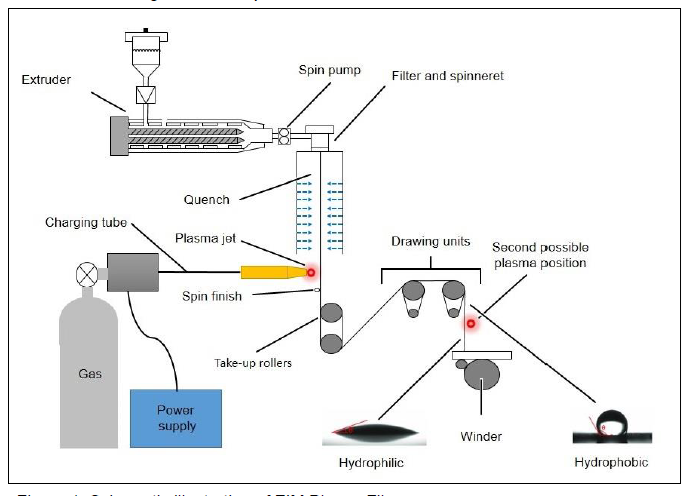
A compact plasma treatment concept integrated directly into melt spinning and filament processing. The process diagram identifies two decisive integration points: immediately after the quench and spin-finish zone, or farther downstream around the drawing and winding section. This makes it possible to compare surface activation, wettability and finish reduction while the filament is still under controlled tension, instead of adding a separate treatment step after textile formation.

Material / feedstock
Polyester · polypropylene · polyethylene and other thermoplastic filaments
Core equipment
Melt-spinning pilot, filament guidance, plasma jet, gas and power supply, drawing and winding control
Product / opportunity
Hydrophilic, hydrophobic or otherwise functionalised yarns prepared for coating, bonding, dyeing or composites
Complete project solutionMachines & process equipmentProduct & technology development
Discuss this project with EPCOTEC →
DiaTex Wear-Resistant Yarn Contact Elements
08

CERAMICS · FRICTION TESTING · TEXTILE MACHINERY

DiaTex Wear-Resistant Yarn Contact Elements

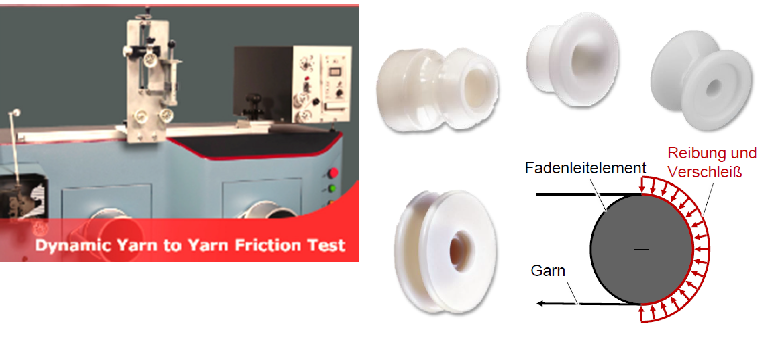
A development and qualification route for ceramic yarn guides exposed to abrasive technical fibers. Replaceable guide geometries and coated ceramic surfaces are evaluated on a dynamic yarn-to-yarn and yarn-to-guide friction platform. The combined approach relates contact geometry, friction, wear, thermal load and yarn damage, allowing the guide material and surface treatment to be selected for the actual production duty rather than from catalogue data alone.

Material / feedstock
Ceramic or hard-metal bodies · functional coatings · abrasive technical yarns
Core equipment
Replaceable guide system, dynamic friction tester, tension sensing, wear inspection and endurance testing
Product / opportunity
Long-life guides for glass, aramid, carbon, tire-cord and dope-dyed synthetic yarn processing
Complete project solutionMachines & process equipmentProduct & technology development
Discuss this project with EPCOTEC →
REPTA - Red Algal Pigments for Textile Coloration
09

ALGAE BIOREFINERY · SUSTAINABLE DYEING

REPTA - Red Algal Pigments for Textile Coloration

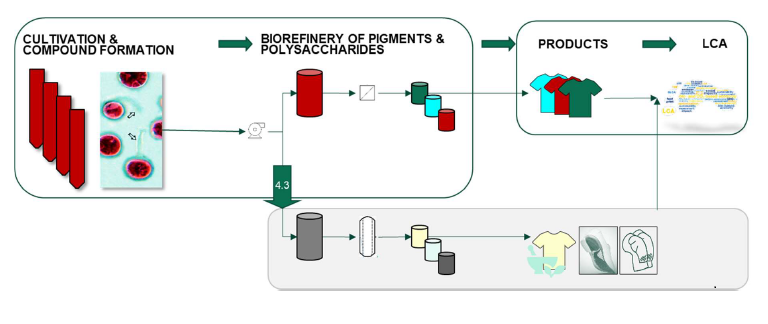
A circular value chain linking controlled algae cultivation and compound formation with the biorefinery separation of pigments and polysaccharides. Conditioned fractions are transferred into textile coloration and functional product routes, while life-cycle assessment connects process choices to environmental performance. Pilot work focuses on pigment yield, fiber affinity, shade reproducibility, wash and light fastness and scalable application with lower fossil and water demand.

Material / feedstock
Algal biomass · natural pigments and polysaccharides · textile substrates
Core equipment
Cultivation, harvesting and extraction modules, fraction conditioning, dyeing or coating pilot and LCA data interfaces
Product / opportunity
Renewable textile colorants, functional finishes and bio-based product concepts
Complete project solutionMachines & process equipmentProduct & technology development
Discuss this project with EPCOTEC →
Scaffolds2Food - Edible Fibrous Scaffolds
10

CULTIVATED FOOD · BIOPROCESS ENGINEERING

Scaffolds2Food - Edible Fibrous Scaffolds

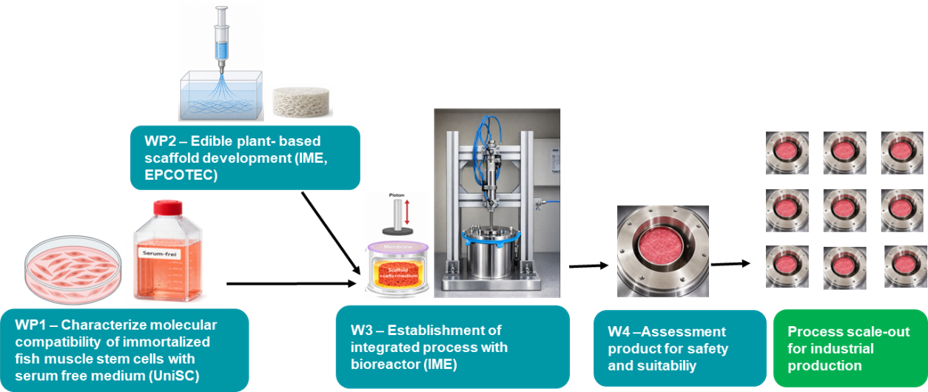
An integrated platform for producing edible, plant-derived scaffolds that support structured cultivated food. Molecular compatibility with food-relevant cells is established first; scaffold formulation and shaping are then combined with a controlled bioreactor process. Safety, suitability and repeatability are evaluated before the route is scaled out into multiple production modules, connecting biomaterial development directly with manufacturable food structures.

Material / feedstock
Plant-derived biopolymers · proteins · food-relevant cells and serum-free media
Core equipment
Sterile scaffold forming, controlled dosing, integrated bioreactor, monitoring and modular scale-out
Product / opportunity
Structured cultivated-food components and a scalable manufacturing route for industrial production
Complete project solutionMachines & process equipmentProduct & technology development
Discuss this project with EPCOTEC →
Dissolving Nanofiber Ocular Drug Delivery
11

NANOFIBERS · PRECISION DRUG DELIVERY

Dissolving Nanofiber Ocular Drug Delivery

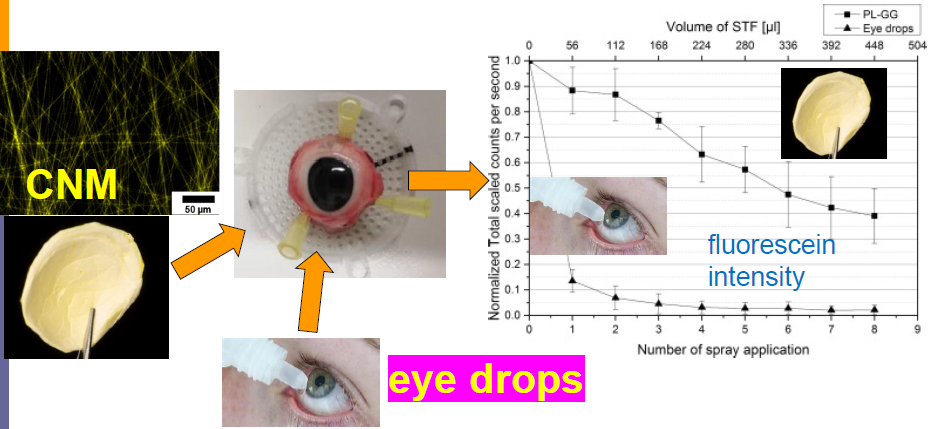
A shaped nanofiber dosage form designed to conform to the eye and release an active ingredient in a controlled, patient-friendly manner. Electrospun structures can be formed to the required curvature, dissolve in tear fluid and create a transparent hydrogel with longer residence time than conventional drops. Fluorescence and release testing quantify how the insert behaves over repeated applications and provide evidence for reproducible formulation, dose and therapeutic performance.

Material / feedstock
Biocompatible polymers · pharmaceutical active ingredients · sterile substrates
Core equipment
GMP-oriented electrospinning, precision dosing, shaped collector, climate control and release analytics
Product / opportunity
Single-dose ocular inserts for sustained local delivery and improved treatment efficiency
Complete project solutionMachines & process equipmentProduct & technology development
Discuss this project with EPCOTEC →
Bioengineered Eardrum Scaffold
12

REGENERATIVE MEDICINE · ELECTROSPINNING

Bioengineered Eardrum Scaffold

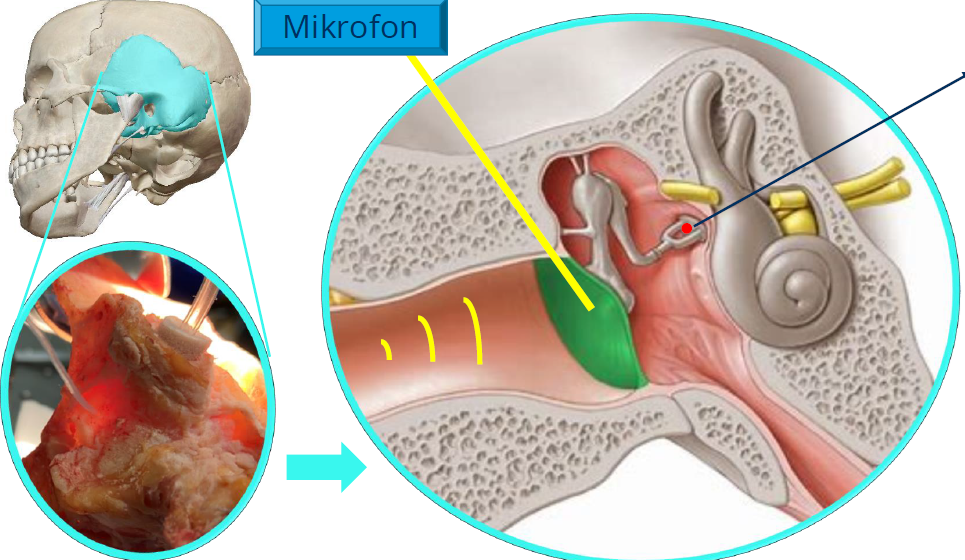
A three-dimensional electrospun membrane engineered to reproduce the geometry and acoustic-mechanical behaviour of the human eardrum. Polymer or biopolymer blends are processed into nano- and micro-scale fiber structures with adjustable diameter, orientation, porosity and stiffness. Anatomical forming is paired with microphone-based acoustic testing and vibration analysis so scaffold architecture can be correlated with sound transmission before biological evaluation and reconstructive use.

Material / feedstock
Biocompatible polymer blends · silk-derived components · functional additives
Core equipment
Multi-material electrospinning, anatomical forming collector, process monitoring, microphone and vibrometry interface
Product / opportunity
Patient-oriented tympanic membrane scaffolds for reconstructive hearing applications
Complete project solutionMachines & process equipmentProduct & technology development
Discuss this project with EPCOTEC →

YOUR PROJECT · OUR ENGINEERING PATH

Interested in the complete plant, one machine package or the product behind a concept?

Tell us your target product, available feedstock, intended capacity and current technical challenge. We will identify whether the right first step is a feasibility study, material trial, pilot system, equipment package or an integrated plant concept.

Start a project discussion

THE EPCOTEC PROJECT PRINCIPLE

Pilot first. Validate completely. Then scale up.

Every new EPCOTEC process begins with a purpose-built pilot system. We verify material behavior, product quality, operating stability, safety, energy demand and all critical interfaces. Only after the pilot meets the agreed technical and economic criteria do we define the industrial scale-up and production plant.

  1. 01Pilot designBuild the smallest technically representative system.
  2. 02ValidationTest quality, repeatability, safety and operating window.
  3. 03Scale-up basisTranslate measured results into industrial design data.
  4. 04Industrial plantEngineer, manufacture, commission and optimize.