01
Textile desizing
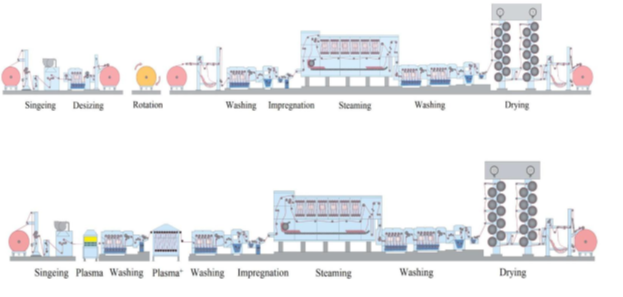
Plasma breaks down or modifies sizing layers before washing. The aim is a shorter wet route, reduced chemical demand and reproducible absorbency without compromising fabric strength.
ATMOSPHERIC · LOW-PRESSURE · ROTOPLASMA
EPCOTEC develops plasma processes and machinery for activation, cleaning, desizing, functionalization and coating of fibers, yarns, fabrics and technical substrates.
Discuss your application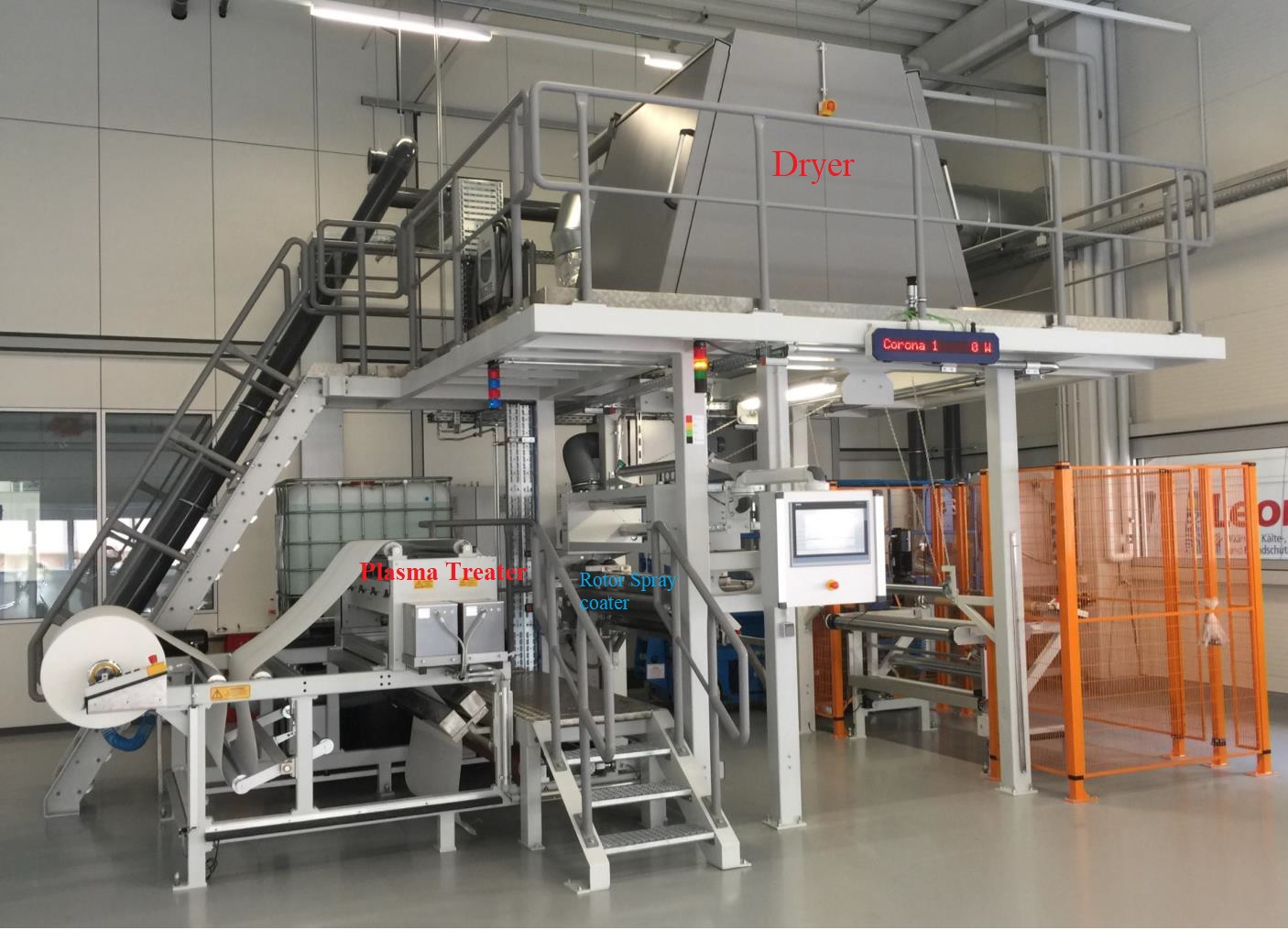
OUR SCOPE
A successful plasma installation is more than a generator and an electrode. EPCOTEC develops the surface reaction together with web handling, atmosphere, exhaust, cleaning, spray application, thermal treatment, automation and the surrounding production process.
Define the required surface function, select the plasma regime and establish a measurable treatment window.
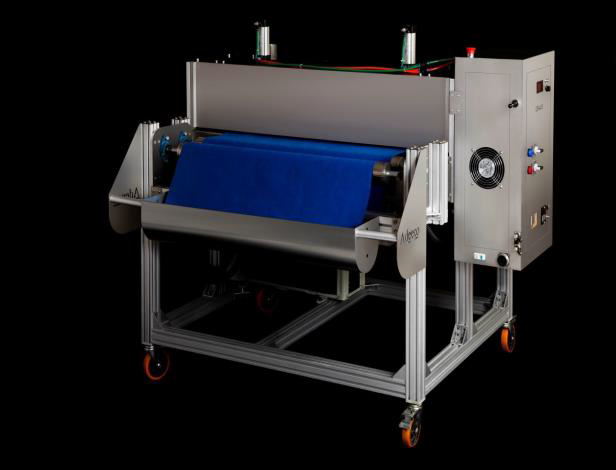
Continuous treatment of roll goods and three-dimensional components without a vacuum chamber.
Uniform activation, cleaning and functionalization under precisely controlled gas and pressure conditions.
Synchronize plasma exposure with web handling, spray application, drying, exhaust and line controls.
Remove or weaken size, increase wettability and prepare fibers for washing, dyeing, coating or bonding.
Translate validated pilot parameters into electrodes, generators, safety systems and production recipes.
FROM LAB TO LINE
Development begins with the material and the required surface function. Laboratory trials identify whether activation, cleaning or functionalization is technically effective. The representative pilot then connects treatment intensity with exposure time, working width, speed, temperature, atmosphere and downstream operations.
Only after performance and repeatability are documented do we define the industrial configuration. This protects the project from scaling an isolated laboratory effect that cannot survive real web tension, contamination, production variation or continuous operation.
APPLICATION FIELDS
Plasma breaks down or modifies sizing layers before washing. The aim is a shorter wet route, reduced chemical demand and reproducible absorbency without compromising fabric strength.
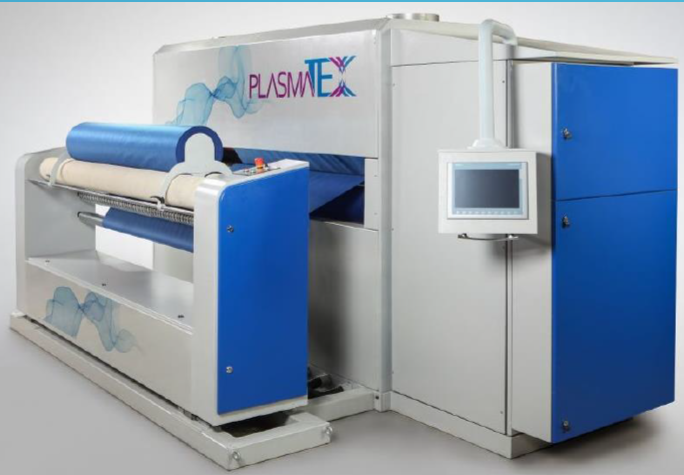
Controlled activation raises surface energy so coatings, laminates, printing inks and adhesive systems can wet and anchor more reliably on textile and polymer surfaces.
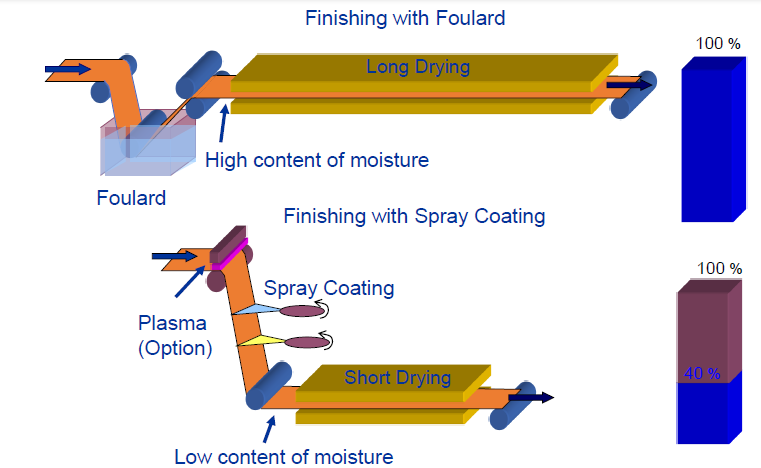
Plasma activation and low-add-on spray finishing can reduce liquor pickup and drying load. Process chemistry can be selected for wetting, moisture management or water-repellent behavior.
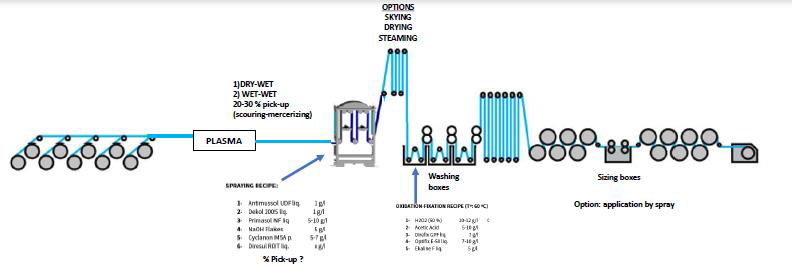
Surface activation improves wetting and chemical accessibility before dyeing or printing. EPCOTEC coordinates plasma dose, spray application, steaming, washing and drying as one route.
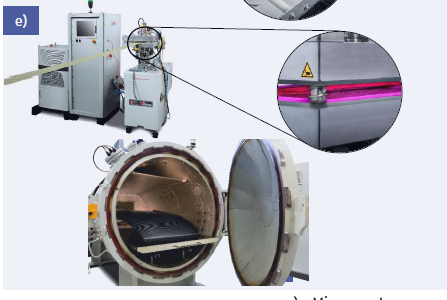
Atmospheric and low-pressure systems support activation and functionalization of woven, knitted, nonwoven and composite structures for demanding technical applications.
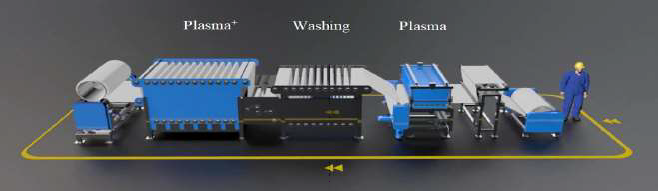
Plasma can prepare filter media, membranes and reinforcement textiles for coating, bonding and functional layers while preserving the bulk properties of the substrate.
THE EPCOTEC PROJECT PRINCIPLE
EPCOTEC does not treat the pilot as a small demonstration machine. It is the technical evidence base for the industrial plasma line. The pilot must reproduce the decisive physics and interfaces of production: electric field, electrode geometry, treatment gap, gas or air flow, surface dose, substrate speed, web tension, moisture, temperature, exhaust and downstream processing.
Every project therefore starts with a defined product target and ends with a documented industrial design basis. Samples, operating data and quality results are correlated before investment in the full working width and production capacity.
We translate the required outcome—wettability, adhesion, desizing efficiency, coating pickup, durability or filtration performance—into measurable acceptance criteria.
Fiber chemistry, construction, finish, contamination, moisture, thermal limits and line speed determine which plasma mechanism and handling concept are realistic.
Electrode geometry, generator power, gas or atmosphere, treatment gap, exposure time, tension, exhaust and downstream steps are combined in a purpose-built pilot.
A structured test matrix establishes quality, repeatability, operating limits, energy demand, safety requirements and the response to normal production variation.
Validated dose and transfer relationships become the basis for working width, number of treatment zones, electrical power, speed range, controls and interfaces.
EPCOTEC supports installation, recipe transfer, operator training, acceptance trials and ramp-up until the agreed product and process criteria are demonstrated.
PLASMA DESIZING IN OPERATION
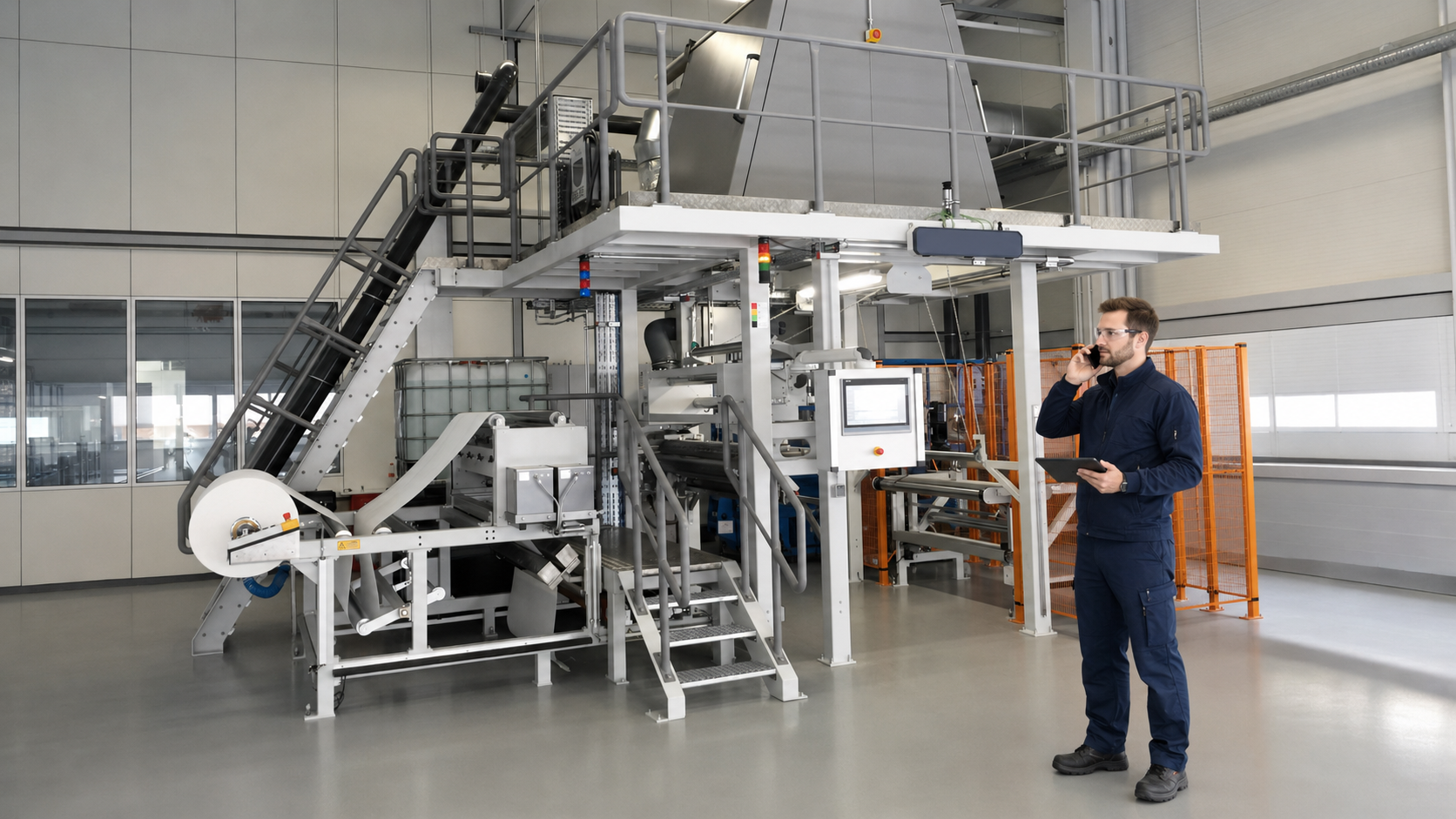
The video documents the behavior of the textile substrate during plasma desizing trials. It complements laboratory values with practical evidence on feeding, treatment uniformity and continuous handling.
YOUR MATERIAL · OUR PROCESS PATH
Send us the substrate, current production route, required function, working width and target capacity. Our engineering team will define the most useful next step—from a focused material trial to a representative pilot campaign and an industrial integration study.
Contact EPCOTEC